



Waterfox for Android is the privacy focused mobile browser that puts you in control. Created fully open source, Waterfox strips out analytics, telemetry, and unnecessary closed source integrations, instead giving you a clean private browsing experience.
Unlike other Android web browsers, Waterfox does not have any analytics or telemetry that track your usage. It also does not use closed source SDKs or have sponsored shortcuts enabled by default. Integrations like the closed source Pocket read-it-later service have been removed. Additionally, all code related to Chinese censorship has been stripped out.
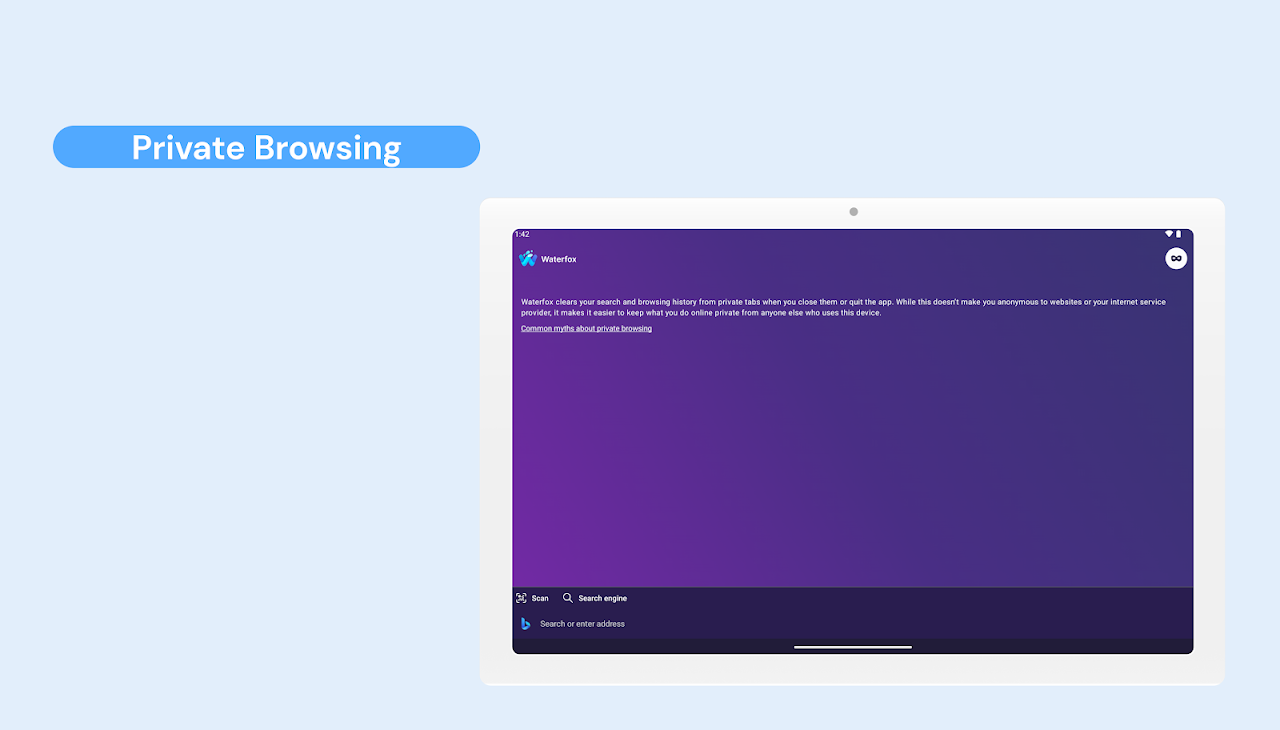
Waterfox puts privacy first. It blocks online trackers, stopping companies from profiling your browsing habits. It comes with encrypted DNS support using DNS over Oblivious HTTP to prevent censorship. With this unique feature, your DNS queries are hidden to avoid network manipulation and is the ONLY web browser to offer a premium feature for free!
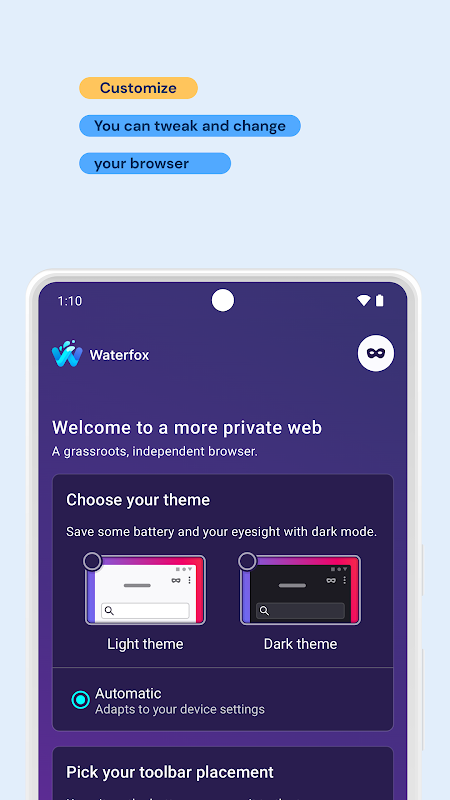
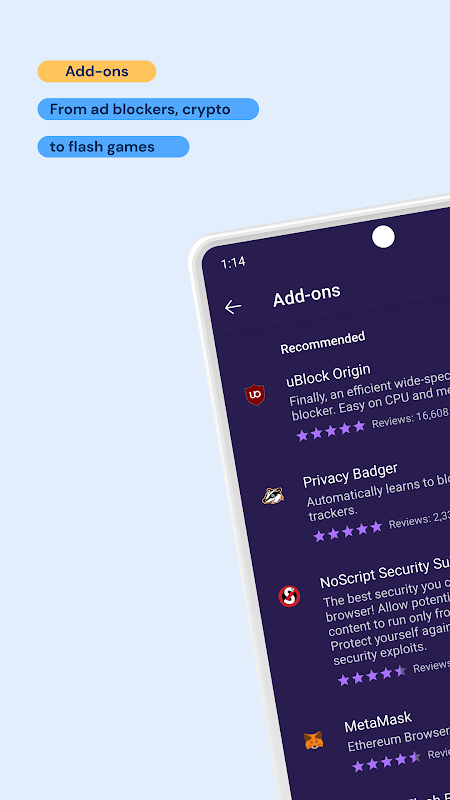
In terms of customization, Waterfox will support add-ons so you can enhance your mobile browsing experience. It also has customizable settings for history, cookies, zoom level, and much more. You are in full control.
Under the hood, Waterfox uses the same lightning fast Gecko engine that powers the largest open source web browser. Pages will load quickly and websites will perform smoothly. Waterfox also supports modern web standards and technologies for the best browsing experience.
Waterfox is independently developed with a focus on user privacy and choice. There are no metrics or data collection happening behind the scenes. Waterfox for Android brings desktop class privacy to mobile.
Give Waterfox a try to take control of your mobile browsing, you can browse the web privately.
Waterfox is a web browser built on the Mozilla Firefox codebase, specifically designed to prioritize performance and privacy. It distinguishes itself from Firefox through several key modifications and optimizations, catering to users seeking a faster, more customizable browsing experience with a focus on respecting user data.
Waterfox emerged as an alternative to Firefox, initially focusing on leveraging the 64-bit architecture of modern processors to achieve performance gains. This focus on 64-bit computing allowed Waterfox to utilize more system resources and handle complex web pages more efficiently. Over time, Waterfox evolved to incorporate further enhancements and address specific user concerns regarding privacy and data collection.
One of the core principles guiding Waterfox's development is a commitment to user privacy. The browser is built with various privacy-enhancing features, including the removal of telemetry and data collection components often found in mainstream browsers. This approach aims to minimize the amount of user data transmitted to third-party servers, providing users with greater control over their online footprint.
Waterfox offers different editions tailored to specific user needs. The "Classic" edition provides a more traditional browsing experience, retaining support for legacy extensions and technologies that might be phased out in other browsers. This caters to users who rely on specific add-ons or prefer a familiar interface. The "Current" edition, on the other hand, embraces newer web technologies and aligns more closely with the current Firefox codebase, offering a more modern browsing experience. Finally, the "G" edition of Waterfox focuses on providing a privacy-focused browsing experience by default, integrating features that block trackers and enhance online anonymity.
The browser's interface remains largely familiar to Firefox users, making the transition relatively seamless. Users can expect a similar layout and functionality, allowing them to easily navigate settings, manage extensions, and customize their browsing experience. Despite the similarities, Waterfox introduces subtle changes to the interface, often aimed at streamlining the user experience and providing access to its unique features.
Performance is a key area where Waterfox strives to excel. By optimizing the browser's code and leveraging the 64-bit architecture, Waterfox aims to deliver faster page load times and smoother browsing performance. This can be particularly noticeable when browsing complex websites or handling resource-intensive tasks, such as streaming media or playing online games.
Waterfox supports a wide range of extensions and add-ons, allowing users to personalize their browsing experience and add functionality. While the compatibility with extensions might vary depending on the chosen edition of Waterfox, users generally have access to a vast library of add-ons that can enhance productivity, security, and privacy.
Security is another important aspect of Waterfox's development. The browser incorporates security features designed to protect users from online threats, such as malware and phishing attacks. Regular updates are released to address security vulnerabilities and ensure that users are protected against the latest threats.
Waterfox is available for various operating systems, including Windows, macOS, and Linux, providing users across different platforms with access to its unique features and performance benefits. This cross-platform availability allows users to maintain a consistent browsing experience regardless of their preferred operating system.
The development of Waterfox is driven by a community of users and developers who contribute to the project. This community-driven approach ensures that the browser continues to evolve and adapt to the changing needs of its users. Feedback from the community is actively considered in the development process, shaping the direction of the browser and ensuring that it remains a viable alternative to mainstream browsers.
Waterfox presents a compelling option for users seeking a performance-oriented and privacy-focused web browser. Its commitment to optimizing performance, respecting user privacy, and providing a customizable browsing experience makes it a valuable alternative for those who prioritize these aspects in their online activities. Whether choosing the Classic, Current, or G edition, users can find a version of Waterfox that caters to their specific needs and preferences, offering a tailored browsing experience that empowers them to control their online interactions.
Waterfox for Android is the privacy focused mobile browser that puts you in control. Created fully open source, Waterfox strips out analytics, telemetry, and unnecessary closed source integrations, instead giving you a clean private browsing experience.
Unlike other Android web browsers, Waterfox does not have any analytics or telemetry that track your usage. It also does not use closed source SDKs or have sponsored shortcuts enabled by default. Integrations like the closed source Pocket read-it-later service have been removed. Additionally, all code related to Chinese censorship has been stripped out.
Waterfox puts privacy first. It blocks online trackers, stopping companies from profiling your browsing habits. It comes with encrypted DNS support using DNS over Oblivious HTTP to prevent censorship. With this unique feature, your DNS queries are hidden to avoid network manipulation and is the ONLY web browser to offer a premium feature for free!
In terms of customization, Waterfox will support add-ons so you can enhance your mobile browsing experience. It also has customizable settings for history, cookies, zoom level, and much more. You are in full control.
Under the hood, Waterfox uses the same lightning fast Gecko engine that powers the largest open source web browser. Pages will load quickly and websites will perform smoothly. Waterfox also supports modern web standards and technologies for the best browsing experience.
Waterfox is independently developed with a focus on user privacy and choice. There are no metrics or data collection happening behind the scenes. Waterfox for Android brings desktop class privacy to mobile.
Give Waterfox a try to take control of your mobile browsing, you can browse the web privately.
Waterfox is a web browser built on the Mozilla Firefox codebase, specifically designed to prioritize performance and privacy. It distinguishes itself from Firefox through several key modifications and optimizations, catering to users seeking a faster, more customizable browsing experience with a focus on respecting user data.
Waterfox emerged as an alternative to Firefox, initially focusing on leveraging the 64-bit architecture of modern processors to achieve performance gains. This focus on 64-bit computing allowed Waterfox to utilize more system resources and handle complex web pages more efficiently. Over time, Waterfox evolved to incorporate further enhancements and address specific user concerns regarding privacy and data collection.
One of the core principles guiding Waterfox's development is a commitment to user privacy. The browser is built with various privacy-enhancing features, including the removal of telemetry and data collection components often found in mainstream browsers. This approach aims to minimize the amount of user data transmitted to third-party servers, providing users with greater control over their online footprint.
Waterfox offers different editions tailored to specific user needs. The "Classic" edition provides a more traditional browsing experience, retaining support for legacy extensions and technologies that might be phased out in other browsers. This caters to users who rely on specific add-ons or prefer a familiar interface. The "Current" edition, on the other hand, embraces newer web technologies and aligns more closely with the current Firefox codebase, offering a more modern browsing experience. Finally, the "G" edition of Waterfox focuses on providing a privacy-focused browsing experience by default, integrating features that block trackers and enhance online anonymity.
The browser's interface remains largely familiar to Firefox users, making the transition relatively seamless. Users can expect a similar layout and functionality, allowing them to easily navigate settings, manage extensions, and customize their browsing experience. Despite the similarities, Waterfox introduces subtle changes to the interface, often aimed at streamlining the user experience and providing access to its unique features.
Performance is a key area where Waterfox strives to excel. By optimizing the browser's code and leveraging the 64-bit architecture, Waterfox aims to deliver faster page load times and smoother browsing performance. This can be particularly noticeable when browsing complex websites or handling resource-intensive tasks, such as streaming media or playing online games.
Waterfox supports a wide range of extensions and add-ons, allowing users to personalize their browsing experience and add functionality. While the compatibility with extensions might vary depending on the chosen edition of Waterfox, users generally have access to a vast library of add-ons that can enhance productivity, security, and privacy.
Security is another important aspect of Waterfox's development. The browser incorporates security features designed to protect users from online threats, such as malware and phishing attacks. Regular updates are released to address security vulnerabilities and ensure that users are protected against the latest threats.
Waterfox is available for various operating systems, including Windows, macOS, and Linux, providing users across different platforms with access to its unique features and performance benefits. This cross-platform availability allows users to maintain a consistent browsing experience regardless of their preferred operating system.
The development of Waterfox is driven by a community of users and developers who contribute to the project. This community-driven approach ensures that the browser continues to evolve and adapt to the changing needs of its users. Feedback from the community is actively considered in the development process, shaping the direction of the browser and ensuring that it remains a viable alternative to mainstream browsers.
Waterfox presents a compelling option for users seeking a performance-oriented and privacy-focused web browser. Its commitment to optimizing performance, respecting user privacy, and providing a customizable browsing experience makes it a valuable alternative for those who prioritize these aspects in their online activities. Whether choosing the Classic, Current, or G edition, users can find a version of Waterfox that caters to their specific needs and preferences, offering a tailored browsing experience that empowers them to control their online interactions.