

Basics Of Civil Engineering:
The App provides you with the fast learning and instant revision of the subject focusing on important topics headed under the chapters and every topic is thoroughly explained detailed notes , equation , formulas and course material in an e-handbook. Application makes the task of preparing a lengthy syllabus for exams a very short and convenient. That not only save your time but give you a brief up of specific topics digitally.
This App is to the helping hand of civil engineer consisting reference material, digital books for civil engineering programs and tech degree courses. Conclude your studies with the general aptitude test in relation to the subject and check your scores and start working on the weak areas .
The app is a complete free handbook of Basics of Civil Engineering Basics which covers important topics, notes, materials.
This useful Civil Engineering App lists 60 topics with detailed notes, diagrams, equations, formulas & course material, the topics are listed in 5 chapters. The app is must have for all the engineering science students & professionals.
CHAPTERS :
CIVIL ENGINEERING FORMULAS (1 Topic )
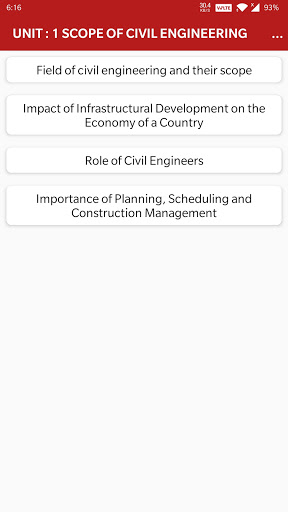
SCOPE OF CIVIL ENGINEERING (4 topics )
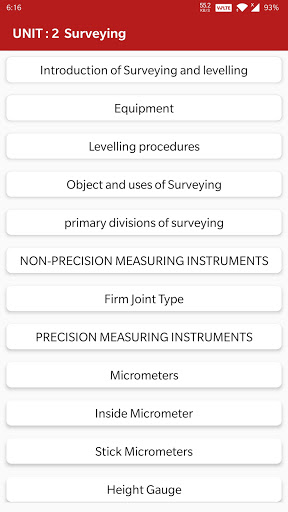
SURVEYING (37 Topics )
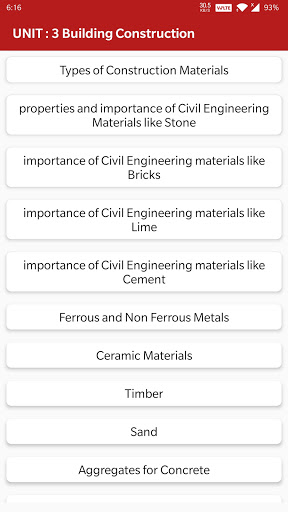
BUILDING CONSTRUCTION (17 Topics )
TRANSPORTATION ENGINEERING (3 Topics )
This app has deep explanation of these topic.
* Transportation
* Coastal engineering
* Structural
* Environmental
* Geotechnical
* Construction
* Architectural
* Engineering mechanics
The App is designed for quick learning, revisions, references at the time of exams and interviews.
This app cover most of related topics and Detailed explanation with all the basics topics. Be a professional with this app. Updates will be going on
The app provides quick revision and reference to the important topics like a detailed flash card notes, it makes it easy & useful for the student or a professional to cover the course syllabus quickly before an exams or interview for jobs.
Features :
* Chapter wise complete Topics
* Rich UI Layout
* Comfortable Read Mode
* Important Exam Topics
* Very simple User Interface
* Cover Most Of Topics
* One click get related All Book
* Mobile Optimized Content
* Mobile Optimized Images
This app will useful for quick reference. The revision of all concepts can be finished within Several hour using this app.
Basics of Civil Engineering Basics is part of engineering education courses and technology degree programs at various universities.
Instead of giving us a lower rating, please mail us your queries, issues or suggestions. I will be happy to solve them for you.
If u want any more topic information please tell us and give us valuable Rating And Suggestion So we can consider it for Future Updates.
Civil engineering, a multifaceted discipline within engineering, encompasses the design, construction, and maintenance of the built environment, including buildings, bridges, roads, and water supply systems. It involves the application of scientific and mathematical principles to ensure the safety, functionality, and sustainability of infrastructure projects.
Core Concepts and Principles:
Civil engineering is founded upon a solid understanding of fundamental principles, including:
* Structural Mechanics: Analysis and design of structures to withstand various forces, such as gravity, wind, and seismic activity.
* Geotechnical Engineering: Study of soil and rock properties to provide stable foundations for structures.
* Hydraulics and Hydrology: Design and management of water systems, including dams, reservoirs, and pipelines.
* Transportation Engineering: Planning, design, and construction of transportation infrastructure, including roads, railways, and airports.
* Environmental Engineering: Addressing environmental impacts of civil engineering projects, including water quality management and waste disposal.
Phases of Civil Engineering Projects:
Civil engineering projects typically involve a systematic process:
* Planning and Feasibility Studies: Identifying project needs, evaluating alternatives, and determining project scope.
* Design and Engineering: Developing detailed plans, specifications, and drawings.
* Construction: Executing the project plans, including site preparation, material procurement, and construction activities.
* Operation and Maintenance: Managing and maintaining the completed infrastructure to ensure ongoing safety and performance.
Key Skills and Qualifications:
Successful civil engineers possess a diverse range of skills and qualifications:
* Technical Proficiency: Strong foundation in mathematics, physics, and engineering principles.
* Problem-Solving Abilities: Capacity to analyze complex problems and develop innovative solutions.
* Communication and Collaboration: Effective communication with clients, contractors, and team members.
* Project Management Skills: Ability to manage multidisciplinary projects and meet deadlines.
* Attention to Detail: Meticulous attention to accuracy and precision in design and construction.
Professional Practice and Ethics:
Civil engineers adhere to ethical standards and professional codes of conduct:
* Public Safety: Ensuring the safety of the public and the environment is paramount.
* Sustainability: Designing and constructing infrastructure with minimal environmental impact.
* Professional Development: Continuous learning and professional growth to stay abreast of industry advancements.
Career Opportunities:
Civil engineering offers a wide range of career opportunities, including:
* Structural Engineer
* Geotechnical Engineer
* Hydraulic Engineer
* Transportation Engineer
* Environmental Engineer
* Project Manager
* Construction Manager
Conclusion:
Civil engineering plays a vital role in shaping the built environment and improving the quality of life. It requires a combination of technical expertise, problem-solving skills, and ethical considerations. With its diverse career opportunities and the ever-evolving challenges of infrastructure development, civil engineering remains a rewarding and impactful profession.
Basics Of Civil Engineering:
The App provides you with the fast learning and instant revision of the subject focusing on important topics headed under the chapters and every topic is thoroughly explained detailed notes , equation , formulas and course material in an e-handbook. Application makes the task of preparing a lengthy syllabus for exams a very short and convenient. That not only save your time but give you a brief up of specific topics digitally.
This App is to the helping hand of civil engineer consisting reference material, digital books for civil engineering programs and tech degree courses. Conclude your studies with the general aptitude test in relation to the subject and check your scores and start working on the weak areas .
The app is a complete free handbook of Basics of Civil Engineering Basics which covers important topics, notes, materials.
This useful Civil Engineering App lists 60 topics with detailed notes, diagrams, equations, formulas & course material, the topics are listed in 5 chapters. The app is must have for all the engineering science students & professionals.
CHAPTERS :
CIVIL ENGINEERING FORMULAS (1 Topic )
SCOPE OF CIVIL ENGINEERING (4 topics )
SURVEYING (37 Topics )
BUILDING CONSTRUCTION (17 Topics )
TRANSPORTATION ENGINEERING (3 Topics )
This app has deep explanation of these topic.
* Transportation
* Coastal engineering
* Structural
* Environmental
* Geotechnical
* Construction
* Architectural
* Engineering mechanics
The App is designed for quick learning, revisions, references at the time of exams and interviews.
This app cover most of related topics and Detailed explanation with all the basics topics. Be a professional with this app. Updates will be going on
The app provides quick revision and reference to the important topics like a detailed flash card notes, it makes it easy & useful for the student or a professional to cover the course syllabus quickly before an exams or interview for jobs.
Features :
* Chapter wise complete Topics
* Rich UI Layout
* Comfortable Read Mode
* Important Exam Topics
* Very simple User Interface
* Cover Most Of Topics
* One click get related All Book
* Mobile Optimized Content
* Mobile Optimized Images
This app will useful for quick reference. The revision of all concepts can be finished within Several hour using this app.
Basics of Civil Engineering Basics is part of engineering education courses and technology degree programs at various universities.
Instead of giving us a lower rating, please mail us your queries, issues or suggestions. I will be happy to solve them for you.
If u want any more topic information please tell us and give us valuable Rating And Suggestion So we can consider it for Future Updates.
Civil engineering, a multifaceted discipline within engineering, encompasses the design, construction, and maintenance of the built environment, including buildings, bridges, roads, and water supply systems. It involves the application of scientific and mathematical principles to ensure the safety, functionality, and sustainability of infrastructure projects.
Core Concepts and Principles:
Civil engineering is founded upon a solid understanding of fundamental principles, including:
* Structural Mechanics: Analysis and design of structures to withstand various forces, such as gravity, wind, and seismic activity.
* Geotechnical Engineering: Study of soil and rock properties to provide stable foundations for structures.
* Hydraulics and Hydrology: Design and management of water systems, including dams, reservoirs, and pipelines.
* Transportation Engineering: Planning, design, and construction of transportation infrastructure, including roads, railways, and airports.
* Environmental Engineering: Addressing environmental impacts of civil engineering projects, including water quality management and waste disposal.
Phases of Civil Engineering Projects:
Civil engineering projects typically involve a systematic process:
* Planning and Feasibility Studies: Identifying project needs, evaluating alternatives, and determining project scope.
* Design and Engineering: Developing detailed plans, specifications, and drawings.
* Construction: Executing the project plans, including site preparation, material procurement, and construction activities.
* Operation and Maintenance: Managing and maintaining the completed infrastructure to ensure ongoing safety and performance.
Key Skills and Qualifications:
Successful civil engineers possess a diverse range of skills and qualifications:
* Technical Proficiency: Strong foundation in mathematics, physics, and engineering principles.
* Problem-Solving Abilities: Capacity to analyze complex problems and develop innovative solutions.
* Communication and Collaboration: Effective communication with clients, contractors, and team members.
* Project Management Skills: Ability to manage multidisciplinary projects and meet deadlines.
* Attention to Detail: Meticulous attention to accuracy and precision in design and construction.
Professional Practice and Ethics:
Civil engineers adhere to ethical standards and professional codes of conduct:
* Public Safety: Ensuring the safety of the public and the environment is paramount.
* Sustainability: Designing and constructing infrastructure with minimal environmental impact.
* Professional Development: Continuous learning and professional growth to stay abreast of industry advancements.
Career Opportunities:
Civil engineering offers a wide range of career opportunities, including:
* Structural Engineer
* Geotechnical Engineer
* Hydraulic Engineer
* Transportation Engineer
* Environmental Engineer
* Project Manager
* Construction Manager
Conclusion:
Civil engineering plays a vital role in shaping the built environment and improving the quality of life. It requires a combination of technical expertise, problem-solving skills, and ethical considerations. With its diverse career opportunities and the ever-evolving challenges of infrastructure development, civil engineering remains a rewarding and impactful profession.