




Find great writing
What is Seabird?
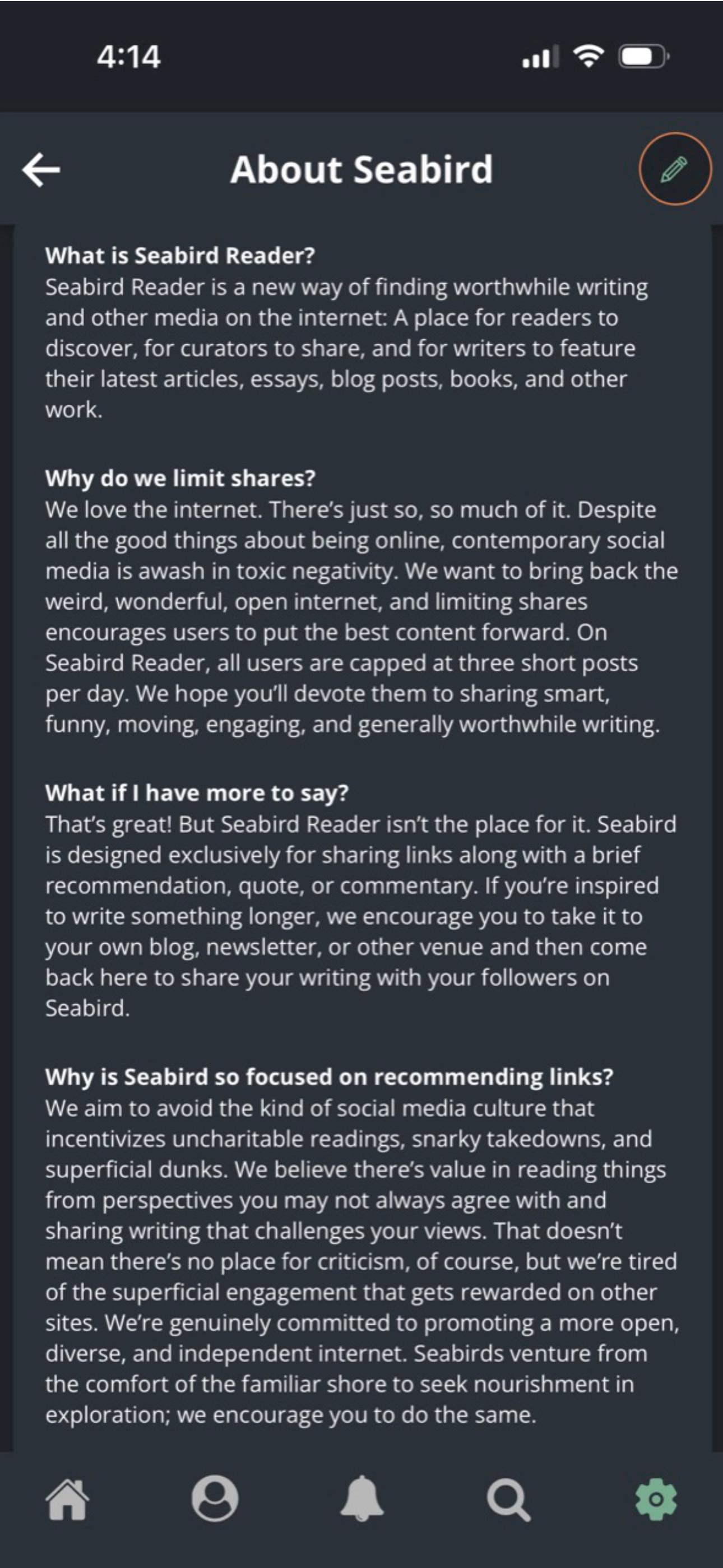
Seabird is a new way of finding worthwhile writing and other media on the internet: A place for readers to discover, for curators to share, and for writers to feature their latest articles, essays, blog posts, books, and other work.
Why do we limit shares?
We love the internet. There’s just so, so much of it. Despite all the good things about being online, contemporary social media is awash in toxic negativity. We want to bring back the weird, wonderful, open internet, and limiting shares encourages users to put the best content forward. On Seabird, all users are capped at three short posts per day. We hope you’ll devote them to sharing smart, funny, moving, engaging, and generally worthwhile writing.
What if I have more to say?
That’s great! But Seabird isn’t the place for it. Seabird is designed exclusively for sharing links along with a brief recommendation, quote, or commentary. If you’re inspired to write something longer, we encourage you to take it to your own blog, newsletter, or other venue and then come back here to share your writing with your followers on Seabird.
Why is Seabird so focused on recommending links?
We aim to avoid the kind of social media culture that incentivizes uncharitable readings, snarky takedowns, and superficial dunks. We believe there’s value in reading things from perspectives you may not always agree with and sharing writing that challenges your views. That doesn’t mean there’s no place for criticism, of course, but we’re tired of the superficial engagement that gets rewarded on other sites. We’re genuinely committed to promoting a more open, diverse, and independent internet. Seabirds venture from the comfort of the familiar shore to seek nourishment in exploration; we encourage you to do the same.
What is “Original Work”?
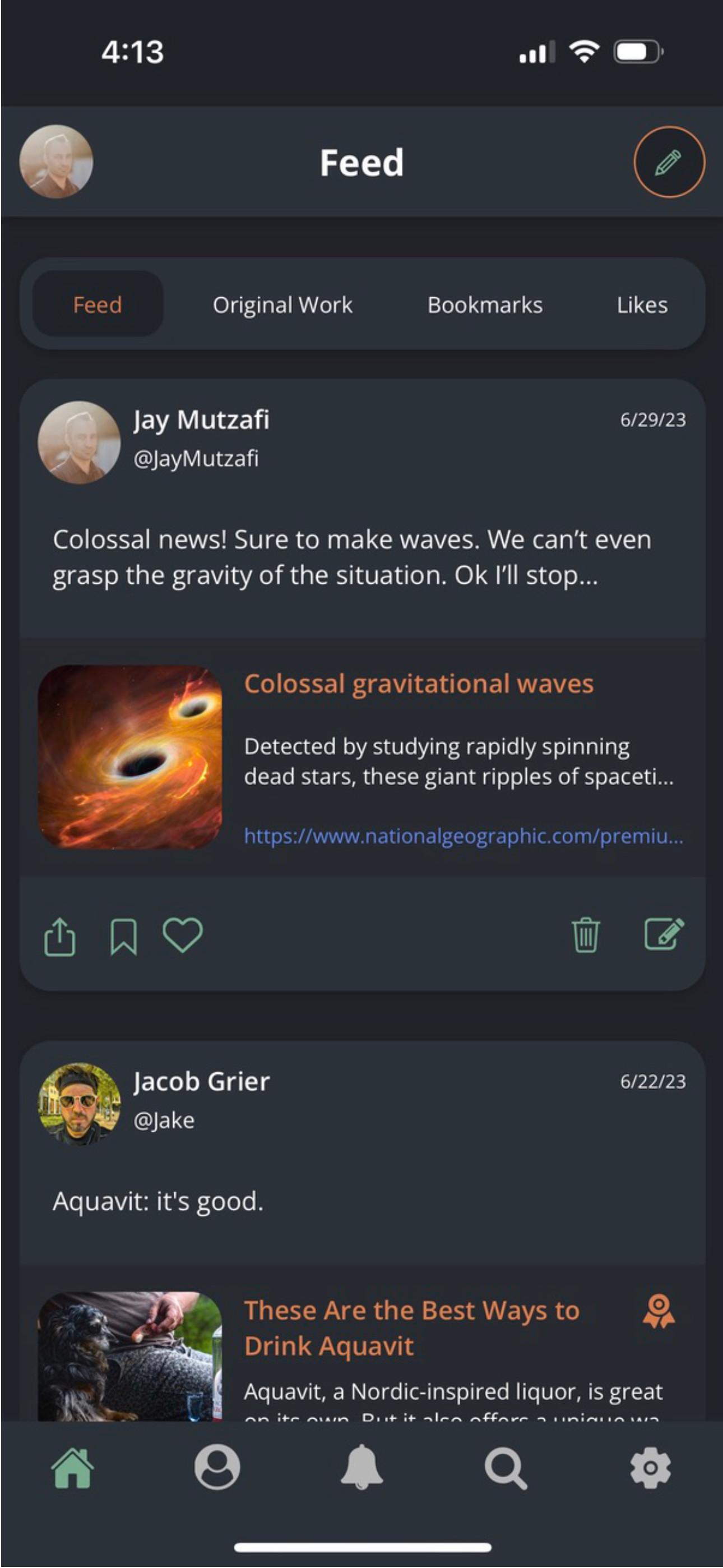
When you share your own writing or other content on Seabird, you have the option of highlighting it as your original work. These posts are highlighted in orange and collected in a priority tab where readers can dive right into the latest publications from writers they follow. Profile pages also feature a tab collecting original work, providing an easy-to-access portfolio for individual writers (or, as we like to call it, their “SeaVee”). When you share something under your own byline, check the “original work” option when posting.
Wait! Is this a sneaky plan to bring back the blogosphere?
Quite possibly! We know that many share our nostalgia for a more open internet and our frustration with social media. We’re not trying to turn back the clock, but we do seek to promote a more fulfilling ecosystem of writing, reporting, and ideas. We’ve thought a lot about how to build a platform that supports that goal and Seabird is the result.
What are reposts and hat tips?
When you discover content you’d like to recommend on Seabird, the repost button makes it easy to share in a post of your own. It also automatically adds a hat tip crediting the original poster for bringing the link to your attention. Including this is optional, but it’s a nice way to say thanks and promote users who are adding value to the Seabird community.
What's New in the Latest Version 1.123.0
Last updated on Jul 11, 2024
Bug fixes
Seabird is a tile-laying puzzle game centered around manipulating and strategically placing tiles to create chains of identical birds. The core gameplay loop involves drawing tiles from a central pool, each depicting a different species of seabird. The goal is to arrange these tiles on your personal board to form contiguous groups of the same bird type. When a group reaches a specific size, usually four or more, they "fly away," clearing space on your board and awarding you points. The game continues until a player reaches a predetermined score threshold, or until the tile pool is depleted.
A key element of Seabird's strategy lies in anticipating future tile draws and planning your board layout accordingly. You must carefully consider where to place each tile to maximize your chances of completing larger groups and earning bonus points. Some tiles may also possess special abilities or scoring modifiers, adding another layer of complexity to the decision-making process. Furthermore, players often need to balance immediate scoring opportunities with long-term planning, as focusing solely on short-term gains can leave you with a cluttered board and limited options later in the game. Mastering Seabird involves a blend of spatial reasoning, strategic foresight, and a bit of luck in drawing the right tiles at the right time.
Find great writing
What is Seabird?
Seabird is a new way of finding worthwhile writing and other media on the internet: A place for readers to discover, for curators to share, and for writers to feature their latest articles, essays, blog posts, books, and other work.
Why do we limit shares?
We love the internet. There’s just so, so much of it. Despite all the good things about being online, contemporary social media is awash in toxic negativity. We want to bring back the weird, wonderful, open internet, and limiting shares encourages users to put the best content forward. On Seabird, all users are capped at three short posts per day. We hope you’ll devote them to sharing smart, funny, moving, engaging, and generally worthwhile writing.
What if I have more to say?
That’s great! But Seabird isn’t the place for it. Seabird is designed exclusively for sharing links along with a brief recommendation, quote, or commentary. If you’re inspired to write something longer, we encourage you to take it to your own blog, newsletter, or other venue and then come back here to share your writing with your followers on Seabird.
Why is Seabird so focused on recommending links?
We aim to avoid the kind of social media culture that incentivizes uncharitable readings, snarky takedowns, and superficial dunks. We believe there’s value in reading things from perspectives you may not always agree with and sharing writing that challenges your views. That doesn’t mean there’s no place for criticism, of course, but we’re tired of the superficial engagement that gets rewarded on other sites. We’re genuinely committed to promoting a more open, diverse, and independent internet. Seabirds venture from the comfort of the familiar shore to seek nourishment in exploration; we encourage you to do the same.
What is “Original Work”?
When you share your own writing or other content on Seabird, you have the option of highlighting it as your original work. These posts are highlighted in orange and collected in a priority tab where readers can dive right into the latest publications from writers they follow. Profile pages also feature a tab collecting original work, providing an easy-to-access portfolio for individual writers (or, as we like to call it, their “SeaVee”). When you share something under your own byline, check the “original work” option when posting.
Wait! Is this a sneaky plan to bring back the blogosphere?
Quite possibly! We know that many share our nostalgia for a more open internet and our frustration with social media. We’re not trying to turn back the clock, but we do seek to promote a more fulfilling ecosystem of writing, reporting, and ideas. We’ve thought a lot about how to build a platform that supports that goal and Seabird is the result.
What are reposts and hat tips?
When you discover content you’d like to recommend on Seabird, the repost button makes it easy to share in a post of your own. It also automatically adds a hat tip crediting the original poster for bringing the link to your attention. Including this is optional, but it’s a nice way to say thanks and promote users who are adding value to the Seabird community.
What's New in the Latest Version 1.123.0
Last updated on Jul 11, 2024
Bug fixes
Seabird is a tile-laying puzzle game centered around manipulating and strategically placing tiles to create chains of identical birds. The core gameplay loop involves drawing tiles from a central pool, each depicting a different species of seabird. The goal is to arrange these tiles on your personal board to form contiguous groups of the same bird type. When a group reaches a specific size, usually four or more, they "fly away," clearing space on your board and awarding you points. The game continues until a player reaches a predetermined score threshold, or until the tile pool is depleted.
A key element of Seabird's strategy lies in anticipating future tile draws and planning your board layout accordingly. You must carefully consider where to place each tile to maximize your chances of completing larger groups and earning bonus points. Some tiles may also possess special abilities or scoring modifiers, adding another layer of complexity to the decision-making process. Furthermore, players often need to balance immediate scoring opportunities with long-term planning, as focusing solely on short-term gains can leave you with a cluttered board and limited options later in the game. Mastering Seabird involves a blend of spatial reasoning, strategic foresight, and a bit of luck in drawing the right tiles at the right time.