


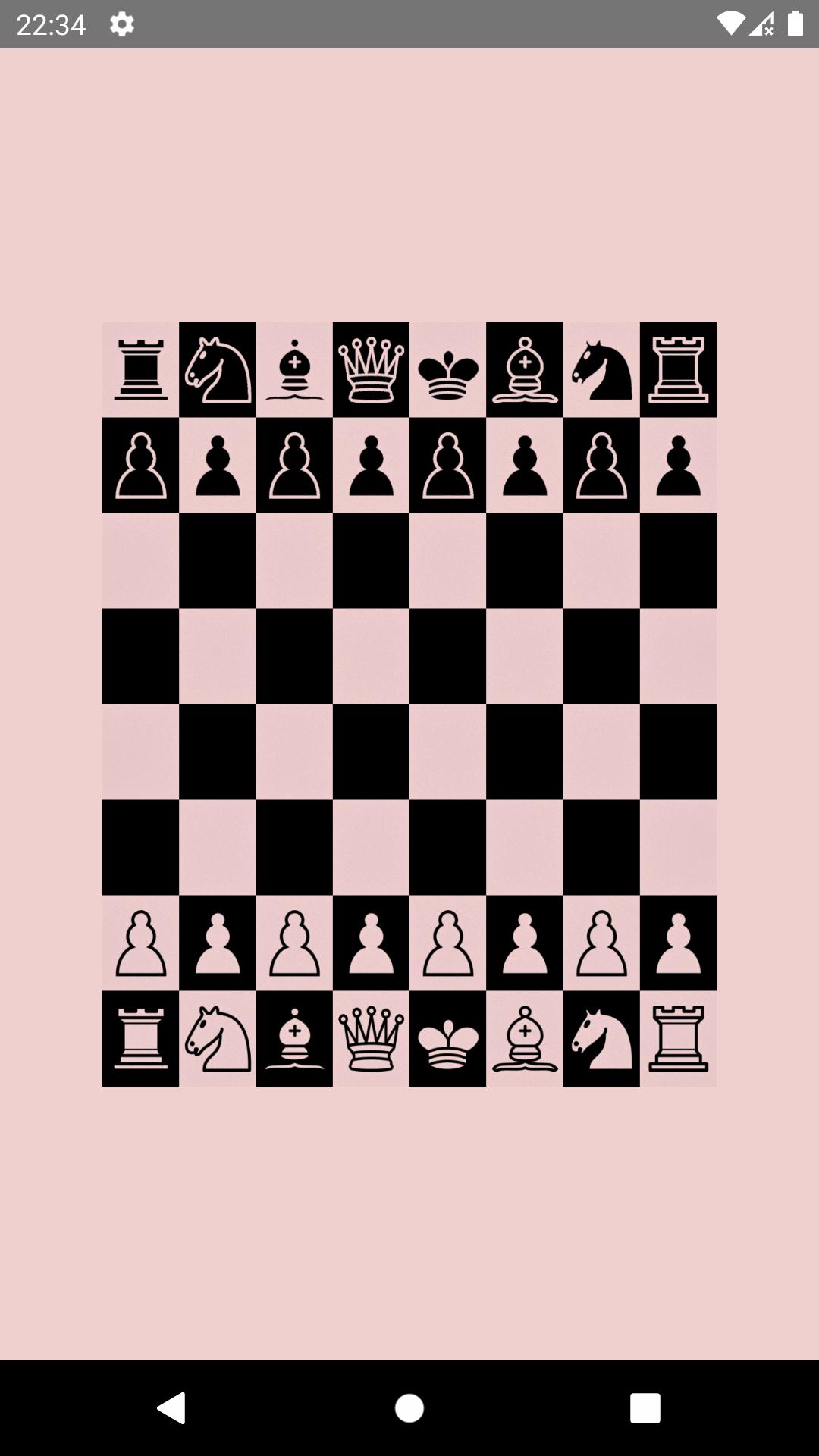
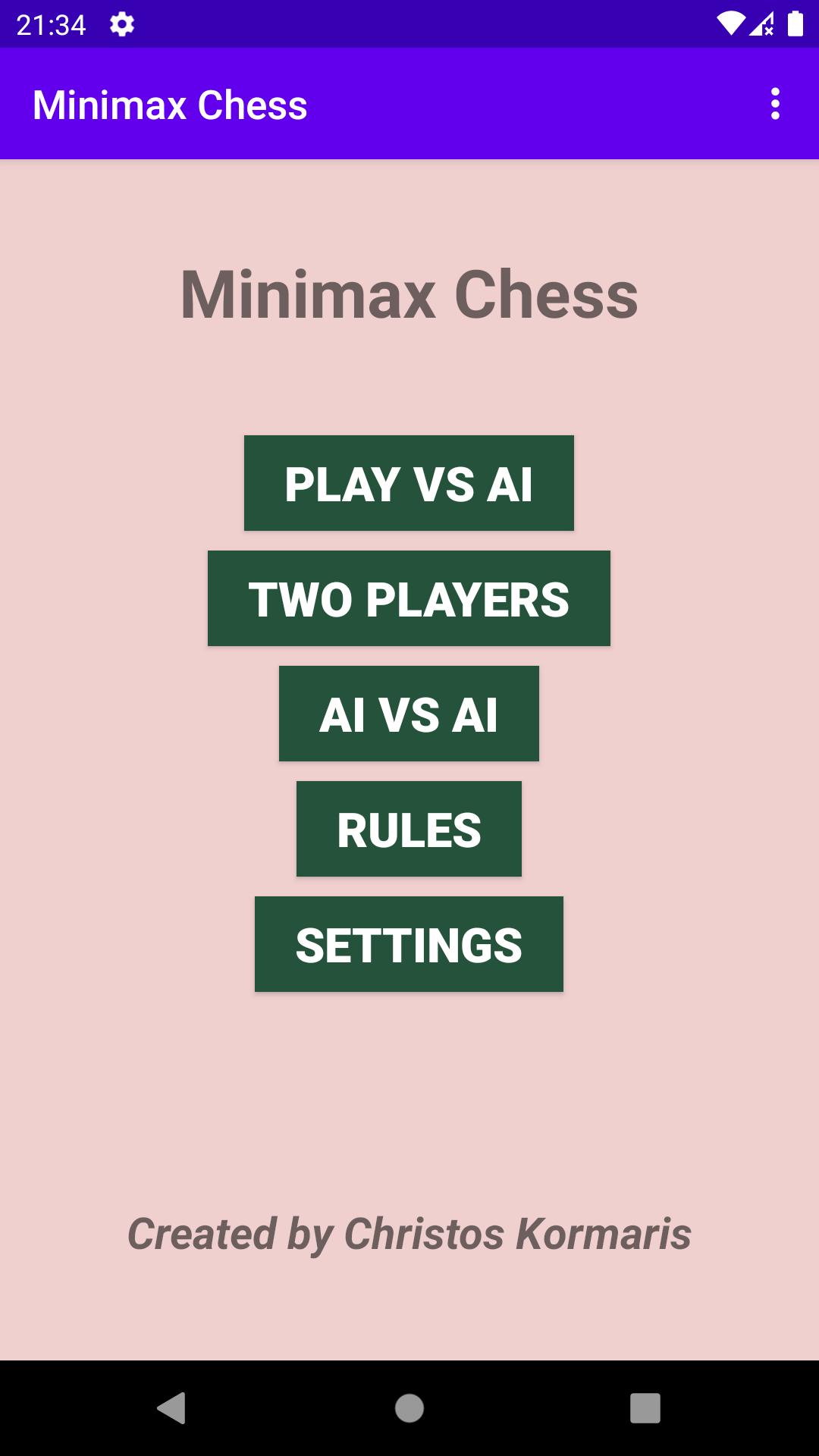
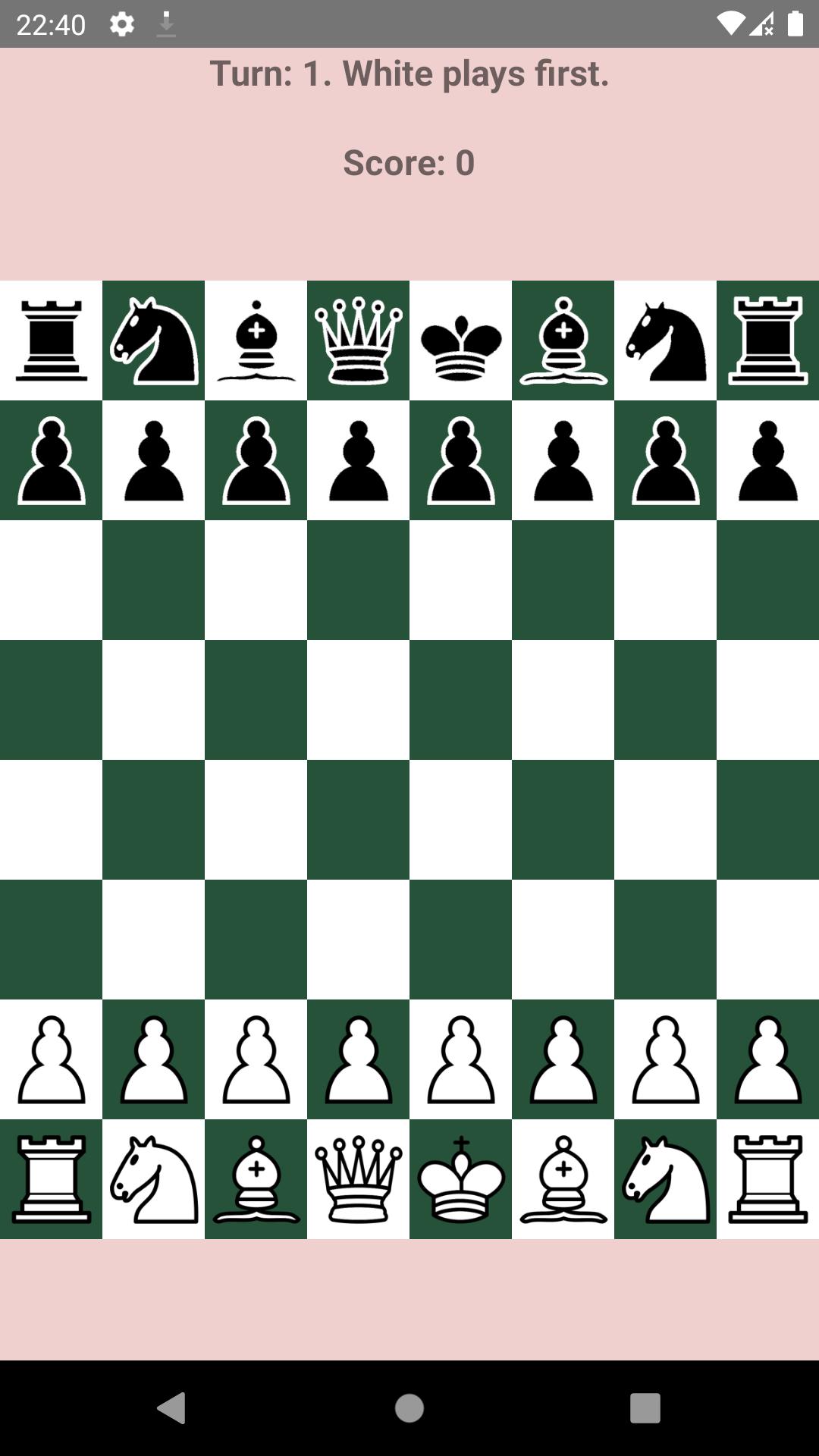
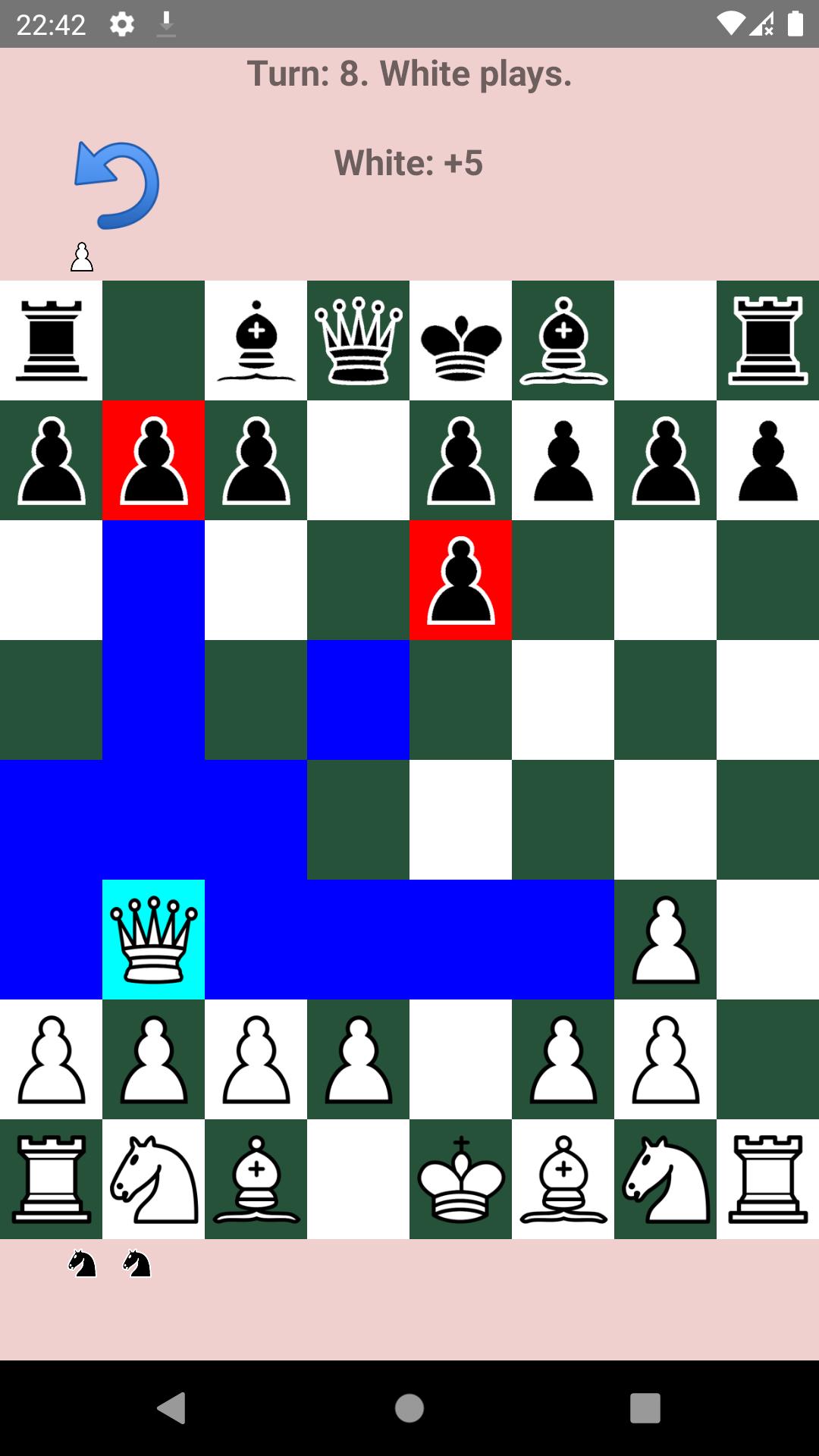
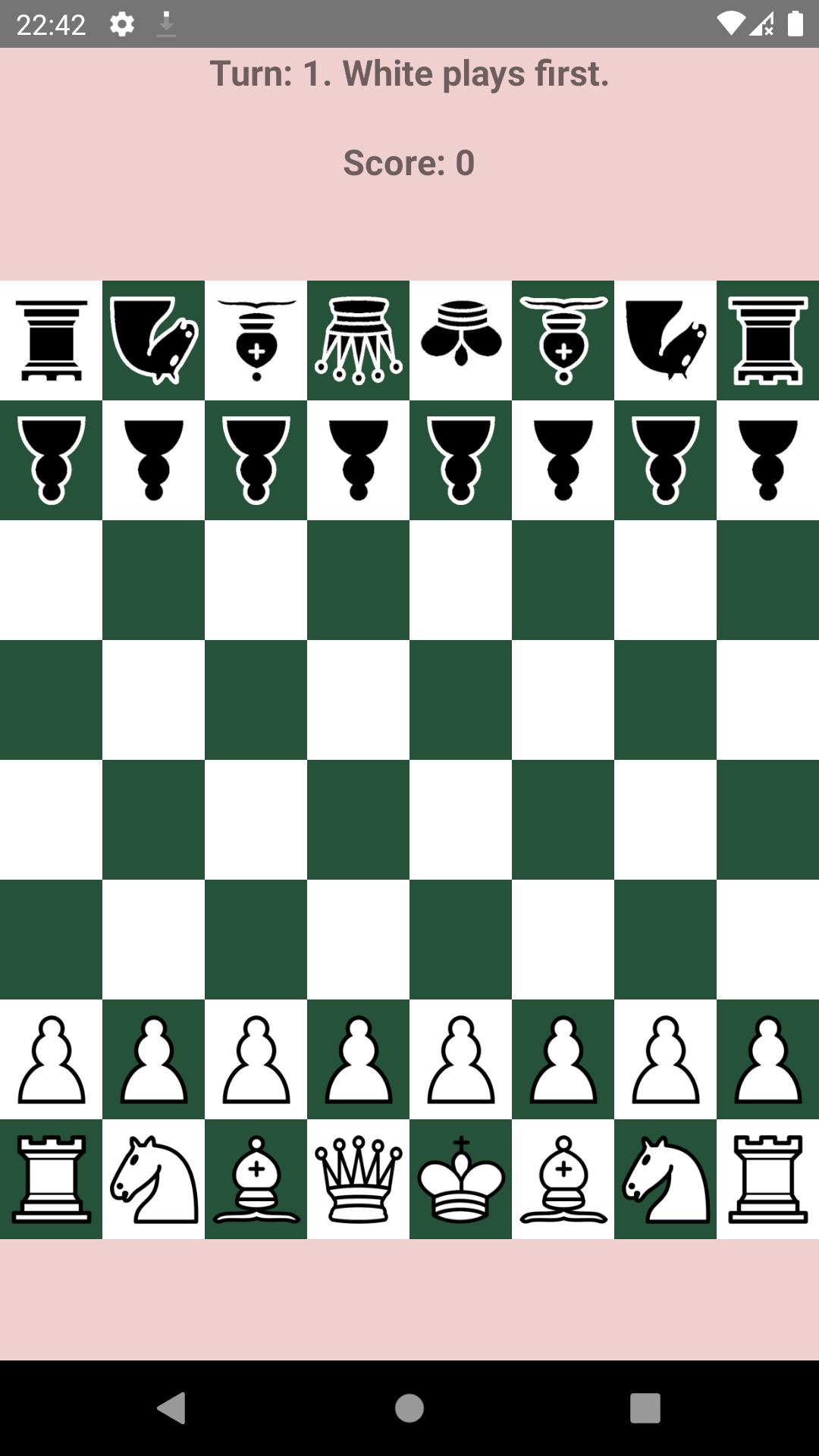
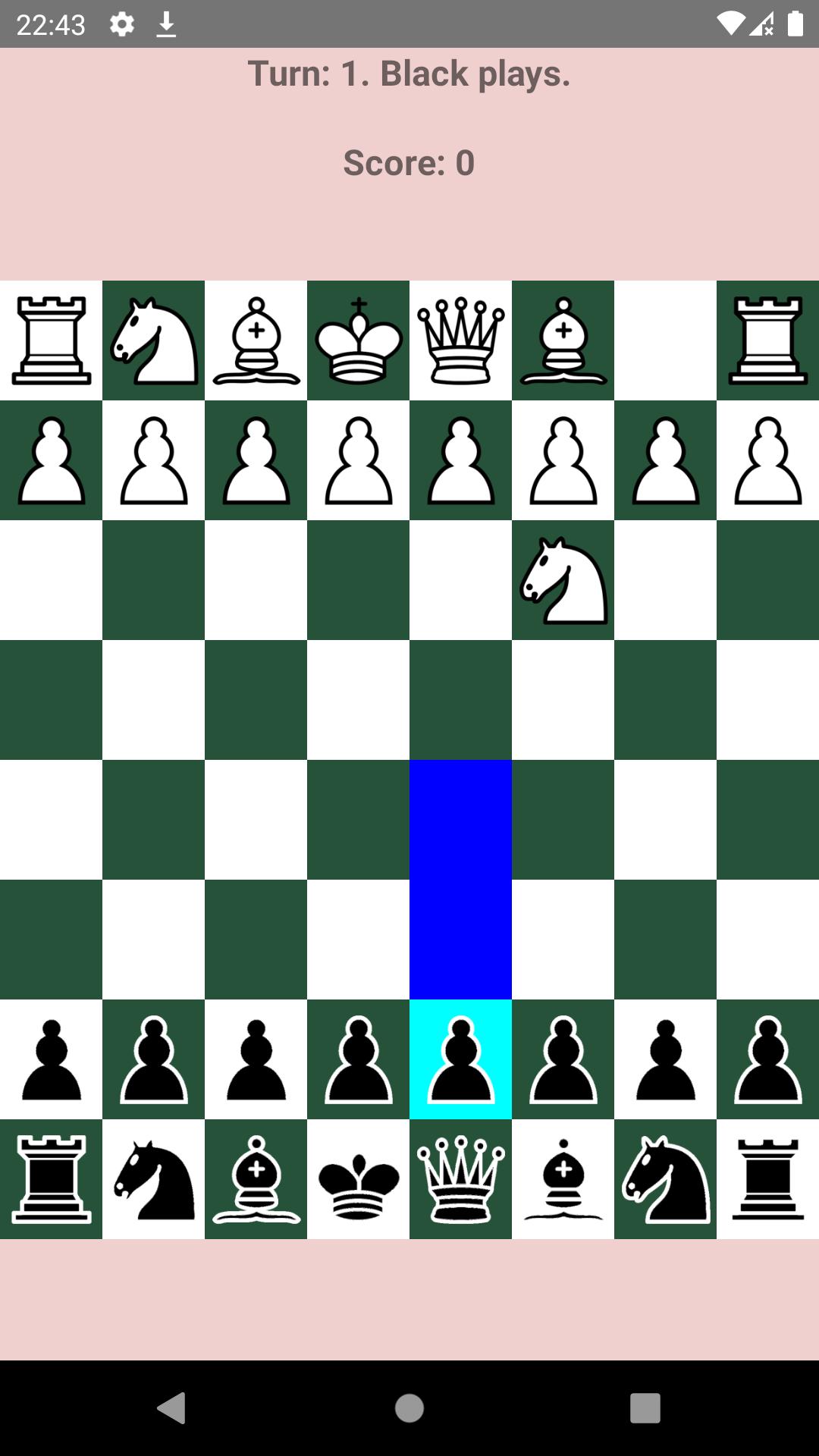
A simple Chess game using the minimax algorithm for the AI.
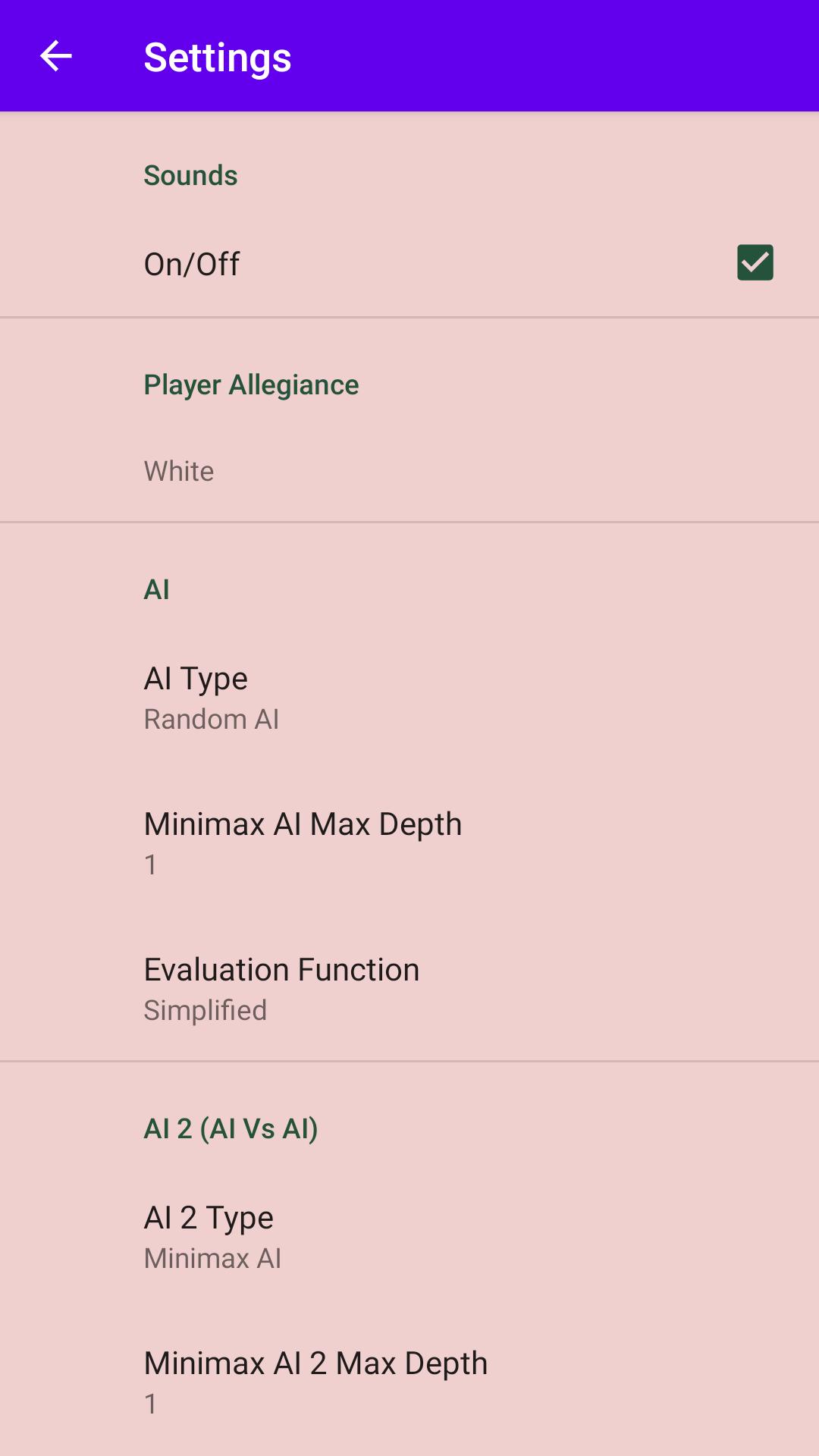
Play against a Minimax AI or Random AI, against a friend, or watch AI play versus AI, with this simple and elegant Chess game.
What's New in the Latest Version 12.1
Last updated on Jul 2, 2024
Fix bug about the move message after game over.
Minimax ChessIntroduction
Minimax Chess is a variant of traditional chess that employs a specific decision-making algorithm called the minimax algorithm to evaluate board positions and determine optimal moves. This algorithm considers all possible moves and countermoves up to a predefined depth, assigning a score to each potential outcome based on a set of predefined heuristics.
Gameplay
The gameplay of Minimax Chess largely resembles traditional chess. Players take turns moving their pieces on an 8x8 checkered board, aiming to capture the opponent's king. However, the key difference lies in the use of the minimax algorithm, which guides each player's move selection.
Minimax Algorithm
The minimax algorithm operates recursively, considering all possible moves and countermoves up to a specified depth. For each potential move, it calculates the best possible outcome for the player making the move and the worst possible outcome for the opponent. It then assigns a score to each move based on these outcomes, favoring moves that lead to more advantageous positions.
Depth and Evaluation Function
The depth of the minimax search determines how far into the future the algorithm considers potential moves and countermoves. A greater depth typically leads to more accurate evaluations but also increases the computational complexity. The evaluation function used to assign scores to board positions considers various factors such as material advantage, piece development, king safety, and control of the center.
Player Skill and Strategy
Minimax Chess introduces a unique dynamic where player skill plays a significant role in determining the outcome. Players must understand the underlying principles of the minimax algorithm to make informed decisions. They must also be able to anticipate their opponent's moves and plan accordingly. Strategic thinking and the ability to evaluate board positions become crucial for success.
Computational Challenges
Minimax Chess poses significant computational challenges, especially for deep searches. The number of possible moves and countermoves increases exponentially with the depth of the search. To address this, various techniques are employed, such as alpha-beta pruning and transposition tables, which reduce the number of positions that need to be evaluated.
Variants
Minimax Chess has inspired several variants, each with its own unique set of rules and challenges. Some popular variants include:
* Alpha-Beta Minimax: Utilizes alpha-beta pruning to significantly reduce the number of positions evaluated during the minimax search.
* Iterative Deepening: Gradually increases the depth of the minimax search until a time limit is reached, allowing for more accurate evaluations within a reasonable timeframe.
* Negamax: An optimized version of minimax that simplifies the evaluation process and improves computational efficiency.
Conclusion
Minimax Chess is a fascinating variant of traditional chess that introduces a unique blend of strategy and computational complexity. The use of the minimax algorithm adds an extra layer of challenge and depth to the game, rewarding players who can effectively anticipate their opponent's moves and evaluate board positions. With its strategic gameplay and computational challenges, Minimax Chess continues to captivate players and push the boundaries of chess theory.
A simple Chess game using the minimax algorithm for the AI.
Play against a Minimax AI or Random AI, against a friend, or watch AI play versus AI, with this simple and elegant Chess game.
What's New in the Latest Version 12.1
Last updated on Jul 2, 2024
Fix bug about the move message after game over.
Minimax ChessIntroduction
Minimax Chess is a variant of traditional chess that employs a specific decision-making algorithm called the minimax algorithm to evaluate board positions and determine optimal moves. This algorithm considers all possible moves and countermoves up to a predefined depth, assigning a score to each potential outcome based on a set of predefined heuristics.
Gameplay
The gameplay of Minimax Chess largely resembles traditional chess. Players take turns moving their pieces on an 8x8 checkered board, aiming to capture the opponent's king. However, the key difference lies in the use of the minimax algorithm, which guides each player's move selection.
Minimax Algorithm
The minimax algorithm operates recursively, considering all possible moves and countermoves up to a specified depth. For each potential move, it calculates the best possible outcome for the player making the move and the worst possible outcome for the opponent. It then assigns a score to each move based on these outcomes, favoring moves that lead to more advantageous positions.
Depth and Evaluation Function
The depth of the minimax search determines how far into the future the algorithm considers potential moves and countermoves. A greater depth typically leads to more accurate evaluations but also increases the computational complexity. The evaluation function used to assign scores to board positions considers various factors such as material advantage, piece development, king safety, and control of the center.
Player Skill and Strategy
Minimax Chess introduces a unique dynamic where player skill plays a significant role in determining the outcome. Players must understand the underlying principles of the minimax algorithm to make informed decisions. They must also be able to anticipate their opponent's moves and plan accordingly. Strategic thinking and the ability to evaluate board positions become crucial for success.
Computational Challenges
Minimax Chess poses significant computational challenges, especially for deep searches. The number of possible moves and countermoves increases exponentially with the depth of the search. To address this, various techniques are employed, such as alpha-beta pruning and transposition tables, which reduce the number of positions that need to be evaluated.
Variants
Minimax Chess has inspired several variants, each with its own unique set of rules and challenges. Some popular variants include:
* Alpha-Beta Minimax: Utilizes alpha-beta pruning to significantly reduce the number of positions evaluated during the minimax search.
* Iterative Deepening: Gradually increases the depth of the minimax search until a time limit is reached, allowing for more accurate evaluations within a reasonable timeframe.
* Negamax: An optimized version of minimax that simplifies the evaluation process and improves computational efficiency.
Conclusion
Minimax Chess is a fascinating variant of traditional chess that introduces a unique blend of strategy and computational complexity. The use of the minimax algorithm adds an extra layer of challenge and depth to the game, rewarding players who can effectively anticipate their opponent's moves and evaluate board positions. With its strategic gameplay and computational challenges, Minimax Chess continues to captivate players and push the boundaries of chess theory.